01 · PATTERN
Pattern Hair Loss
Patients with suitable areas of stable donor hair may be candidates for surgical hair restoration.


Modern hair restoration focuses on careful follicular unit harvesting, natural hairline design and strategic placement of grafts to restore hair density while respecting the patient's existing hair.
A practical guide to modern follicular unit hair restoration.
Unlike older strip-harvesting techniques, FUE involves removing individual follicular units rather than taking a continuous strip of scalp. The harvested grafts can then be prepared and placed according to the planned hairline and density.
Modern hair transplantation is not simply about placing as many grafts as possible. Planning considers the patient's existing hair, donor supply, hairline design, direction of growth, density and long-term hair loss pattern.
For patients searching for FUE Hair Transplant in Lahore or a Plastic Surgeon in Lahore , suitability should be determined through an individual assessment rather than a fixed graft-number approach.
Hair loss pattern, donor area, existing density and hair characteristics are assessed individually.
Hairline design considers facial proportions, age and the patient's long-term hair pattern.
Donor hair is a finite resource, so graft allocation should be considered carefully.
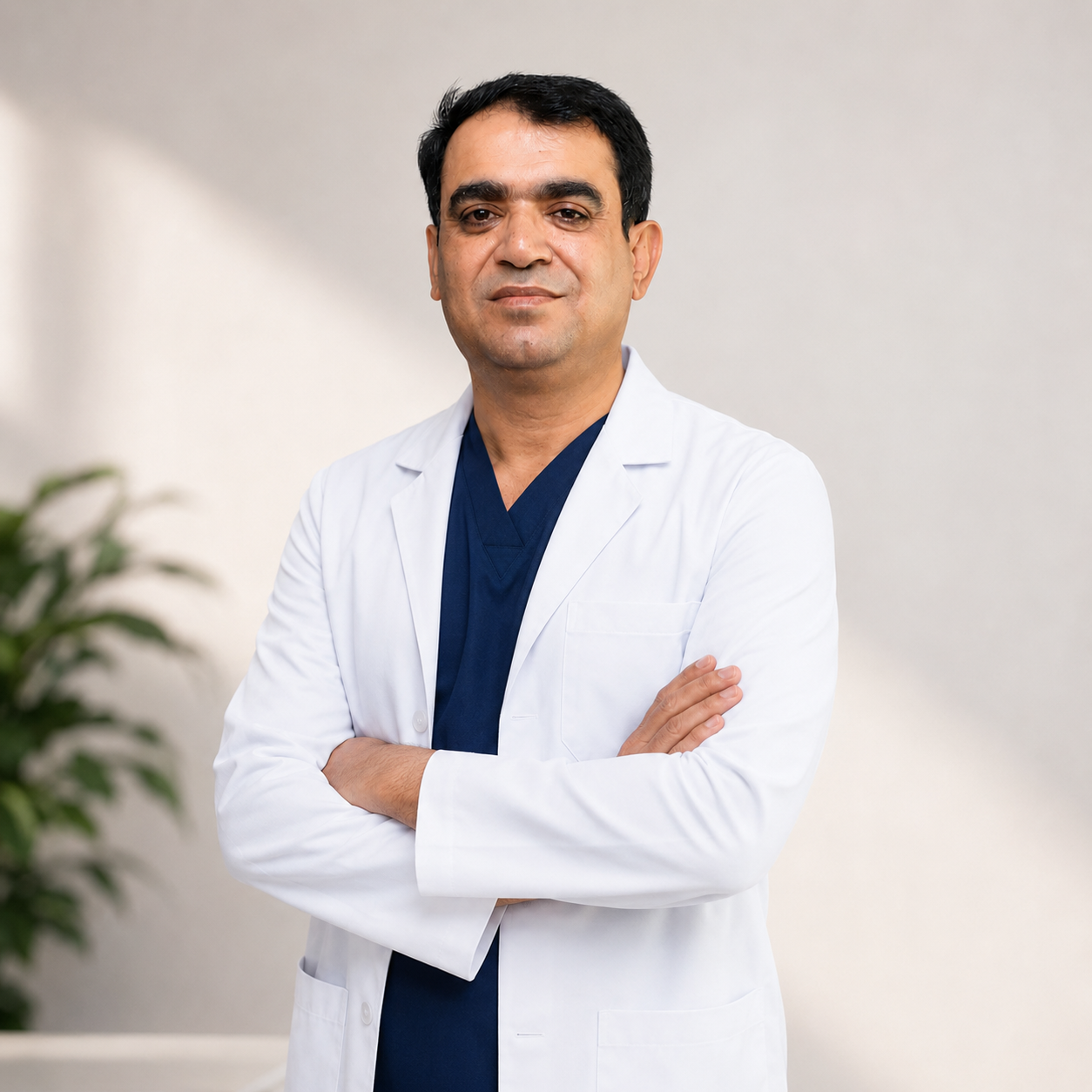
Patients considering hair restoration can discuss their hair loss pattern, donor area, expectations and available treatment options during an individual consultation.
The goal is to determine whether FUE or another hair restoration approach is appropriate for the patient's individual circumstances.
Hair transplantation is not suitable for every type or stage of hair loss.
Patients with suitable areas of stable donor hair may be candidates for surgical hair restoration.
Carefully selected grafts may be used to restore or refine a receding frontal hairline.
Some patients may benefit from graft placement in areas of crown thinning depending on donor availability.
Selected areas with reduced density can sometimes be improved using strategically placed grafts.
Hair transplantation may be considered for certain stable scars after appropriate assessment.
Good candidates require sufficient donor resources and realistic expectations about future hair loss.
Modern hair transplantation combines donor harvesting, graft preparation, hairline design and strategic implantation.
Individual follicular units are harvested from the donor area using small extraction sites. The grafts are then prepared for placement in the recipient area according to the treatment plan.
Hairline design considers facial proportions, existing hair, age and expected future hair loss. The objective is to create a natural transition rather than an overly straight or artificial line.
Grafts can be allocated according to the patient's pattern of thinning, donor supply and priority areas. This helps use the available donor hair strategically.
Follicular grafts require careful handling during extraction, preparation and implantation. Graft survival depends on multiple surgical and patient factors.
The appropriate technique depends on the patient's anatomy, donor area, hair loss pattern and goals.
Individual follicular units are harvested from the donor area.
Follicular units are obtained from a strip of donor scalp.
Some patients may benefit from medical management rather than surgery.
Hair loss pattern, medical history, expectations and treatment goals are discussed.
The donor area, hair characteristics, recipient areas and long-term plan are assessed.
Selected follicular units are harvested, prepared and placed according to the surgical plan.
Healing and hair growth are monitored during postoperative follow-up.
A hair transplant does not produce an immediate final result. New growth develops progressively.
Temporary redness, swelling, crusting or sensitivity can occur following transplantation.
Transplanted follicles may initially shed before new hair growth develops progressively.
Hair thickness and appearance continue to develop as transplanted hairs mature.
Selected patients may benefit from restoration of a receding or poorly defined frontal hairline.
Grafts can be strategically placed in selected areas where donor resources permit.
Appropriate graft direction, placement and hairline design can support a natural appearance.
Transplantation redistributes available follicular units rather than creating new hair follicles.
Careful donor management can help preserve options for future treatment when appropriate.
Hair restoration can be planned around the patient's unique hair loss pattern and goals.
Hair transplantation is a surgical procedure and should be considered after an appropriate medical assessment.
Swelling around the scalp or forehead can occur during early recovery.
Temporary redness, small crusts or sensitivity can occur around extraction and recipient sites.
Infection is a possible complication of surgical procedures and requires appropriate medical care if it occurs.
Transplanted hairs may temporarily shed before new growth develops.
Hair growth may initially appear uneven while transplanted hairs mature.
The amount of available donor hair is limited, which is why realistic planning is important.
Common questions patients ask when researching hair transplantation in Lahore.
Patients searching for FUE Hair Transplant in Lahore , Hair Transplant in Lahore , FUE Hair Restoration in Lahore , or a Plastic Surgeon in Lahore can begin with an individual consultation with Dr. Muhammad Nasrullah .
A consultation can assess the pattern of hair loss, donor hair availability, hairline characteristics, existing density and treatment goals before deciding whether FUE or another approach is appropriate.
Discuss your hair loss pattern, donor area, hairline goals and treatment options with Dr. Muhammad Nasrullah, Plastic Surgeon in Lahore.
Book a Consultation