01 · UPPER EYELID
Excess Upper-Eyelid Skin
Skin laxity can create a heavier appearance of the upper eyelid and may alter the visible eyelid contour.


Personalised eyelid surgery designed to address selected changes involving the upper eyelids, lower eyelids and the surrounding eye area while maintaining a balanced, natural-looking appearance.
A simple explanation for patients researching eyelid surgery in Lahore.
Upper blepharoplasty primarily addresses concerns involving the upper eyelids, such as excess skin or fullness. Depending on the individual anatomy, the procedure may improve the appearance of a heavy or tired-looking upper eyelid.
Lower blepharoplasty focuses on the lower eyelids and may address selected concerns such as lower-eyelid bags, excess skin and contour irregularities.
For patients searching for Upper & Lower Blepharoplasty in Lahore or a Plastic Surgeon in Lahore , the appropriate procedure depends on an individual examination of the eyelids, surrounding tissues, facial anatomy and treatment goals.
Upper and lower eyelids are assessed separately because each area can have different anatomical and aesthetic concerns.
Treatment planning considers the eyes within the context of the entire face.
The surgical approach is selected according to anatomy, concerns and clinical suitability.
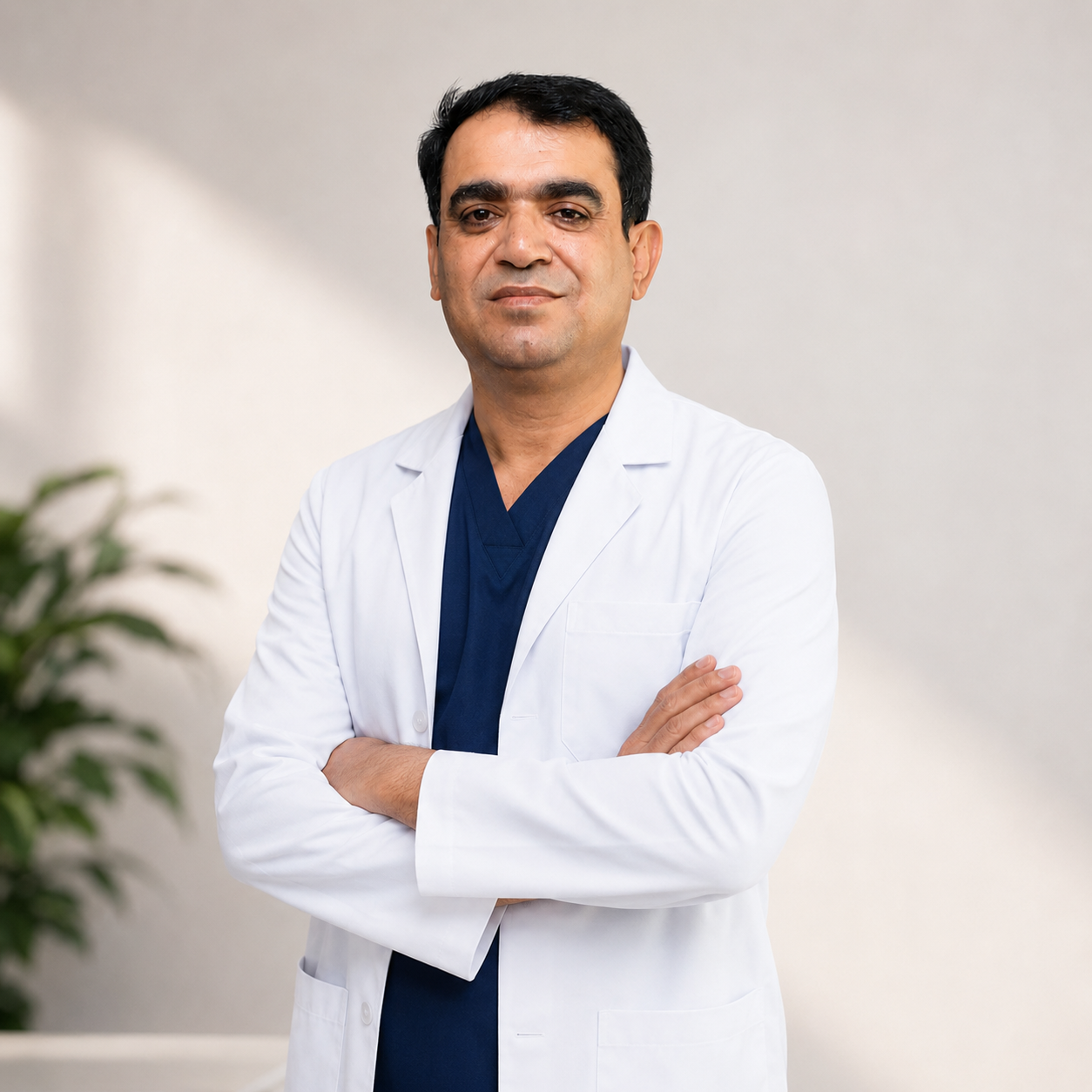
Dr. Muhammad Nasrullah provides consultation and assessment for patients considering plastic and reconstructive surgery, including facial and eyelid procedures.
For patients considering Upper & Lower Blepharoplasty in Lahore , consultation provides an opportunity to assess eyelid anatomy, skin quality, facial balance, individual concerns and treatment expectations.
Changes around the eyes can involve several different tissues and may vary considerably between patients.
Skin laxity can create a heavier appearance of the upper eyelid and may alter the visible eyelid contour.
Changes in underlying tissues can contribute to fullness around the upper eyelid.
Prominence of lower-eyelid fat or changes in surrounding tissues may contribute to a puffy or tired appearance.
Loose lower-eyelid skin may contribute to visible folds or changes in the lower eyelid contour.
The appearance of the eyelids is influenced by the surrounding brow, cheek and facial structures.
A combination of skin laxity, volume changes and tissue contour can contribute to a tired or aged appearance.
Explore the major stages of eyelid surgery.
Consultation may evaluate upper and lower eyelid skin, tissue fullness, eyelid position, facial proportions, brow position, eye-area anatomy, previous procedures and the patient's goals.
Upper blepharoplasty may address selected excess upper-eyelid skin and tissue fullness. The exact technique depends on the patient's anatomy and whether other structures around the eye need to be considered.
Lower blepharoplasty may address selected lower-eyelid bags, excess skin and contour irregularities. The surgical approach is chosen according to lower-eyelid anatomy and the specific concern being treated.
Swelling and bruising are expected during early recovery. Healing progresses gradually and the final appearance should be evaluated after the tissues have had adequate time to settle.
Some patients may require treatment of one eyelid, while others may benefit from assessment of both.
Focuses primarily on the upper eyelid.
Focuses primarily on the lower eyelid.
Eyelid surgery is planned within the context of the surrounding facial anatomy.
Skin, tissue fullness, eyelid crease and overall upper-eyelid contour may be assessed.
Lower-eyelid skin, fat prominence, contour and eyelid position may be evaluated.
The transition between the lower eyelid and cheek can influence the overall appearance of the eye area.
Brow position can influence upper-eyelid appearance and may be considered during facial assessment.
The cheek and lower-eyelid relationship may be considered when evaluating lower-eyelid contour.
The eyes are assessed as part of the overall face rather than as an isolated feature.
Discuss your eyelid concerns, goals, medical history and previous eye-area procedures.
Assess the upper and lower eyelids together with the surrounding facial structures.
Perform the selected surgical approach based on the agreed individual treatment plan.
Postoperative review helps monitor healing as swelling and tissues gradually settle.
Recovery varies depending on the procedure, individual healing and whether upper and lower eyelids are treated together.
Swelling, bruising, tightness and temporary discomfort can occur after eyelid surgery.
Bruising and swelling gradually improve. The eyelids may continue to change as healing progresses.
Incisions and tissues continue to mature over time, with the final appearance assessed after adequate healing.
Eyelid surgery requires careful assessment because the eye and surrounding structures are delicate.
Temporary swelling and bruising around the eyes are common during early recovery.
Temporary dryness, irritation or changes in eye comfort may occur after surgery.
Blepharoplasty involves incisions and therefore produces scars that generally mature with time.
Natural differences between the eyes are common and complete symmetry cannot be guaranteed.
Bleeding, infection and other surgical complications are possible.
Changes in eyelid position or contour are possible and require careful surgical planning.
Common questions patients ask when researching eyelid surgery in Lahore.
Patients searching for Blepharoplasty in Lahore , Upper Blepharoplasty in Lahore , Lower Blepharoplasty in Lahore , or a Plastic Surgeon in Lahore can begin with an individual consultation with Dr. Muhammad Nasrullah .
During consultation, the eyelids and surrounding facial structures can be assessed to determine whether upper blepharoplasty, lower blepharoplasty, both procedures, or another treatment approach is appropriate.
Discuss your upper-eyelid, lower-eyelid or under-eye concerns with Dr. Muhammad Nasrullah, Plastic Surgeon in Lahore.
Book a Consultation